The Night Before Independence: What Colonists Were Doing on July 3, 1776
On the evening of July 3, 1776, most Americans had no idea what was coming.
That sentence requires a moment to sit with, because we have been conditioned — by school curricula, by patriotic pageantry, by two and a half centuries of national mythology — to imagine the founding of the United States as a single luminous moment. A room full of men signing a document. Bells ringing. A new nation bursting into existence on a summer morning.
The reality was messier, slower, and far more interesting.
On July 3rd, the Continental Congress in Philadelphia was still debating. The Declaration of Independence had not yet been formally adopted. Across thirteen colonies, ordinary men and women were doing what people do on ordinary summer evenings: working, worrying, feeding children, sweating through the heat, praying, arguing, and in some cases — especially those far from Philadelphia — having no clear sense that anything unusual was about to happen at all.
This is the story of that night.
What Was Actually Happening in Philadelphia
The Continental Congress had been wrestling with the question of independence for weeks before July 3rd. Richard Henry Lee of Virginia had formally proposed independence on June 7th, and a committee had been appointed to draft a declaration. Thomas Jefferson, working in a rented room on Market Street, had produced a draft. The committee — which also included John Adams, Benjamin Franklin, Roger Sherman, and Robert Livingston — had reviewed and revised it.
By July 2nd, the Congress had voted on Lee’s resolution: twelve colonies in favor, New York abstaining. Independence, in a legal sense, had been declared. John Adams, writing to his wife Abigail on July 3rd, was positively ecstatic. He predicted that July 2nd — not the 4th — would be celebrated by future generations as the great anniversary of American independence.
He was wrong about the date, as it turned out. But on July 3rd, he was not wrong about the magnitude of what was unfolding.
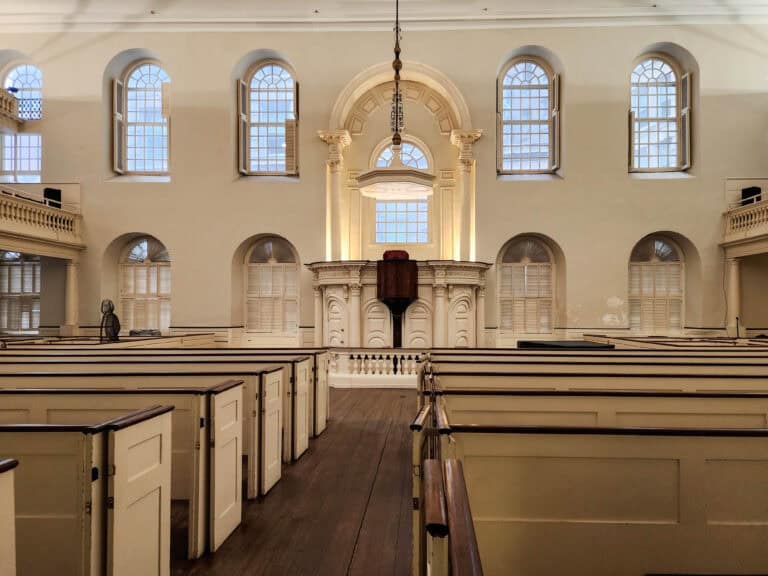
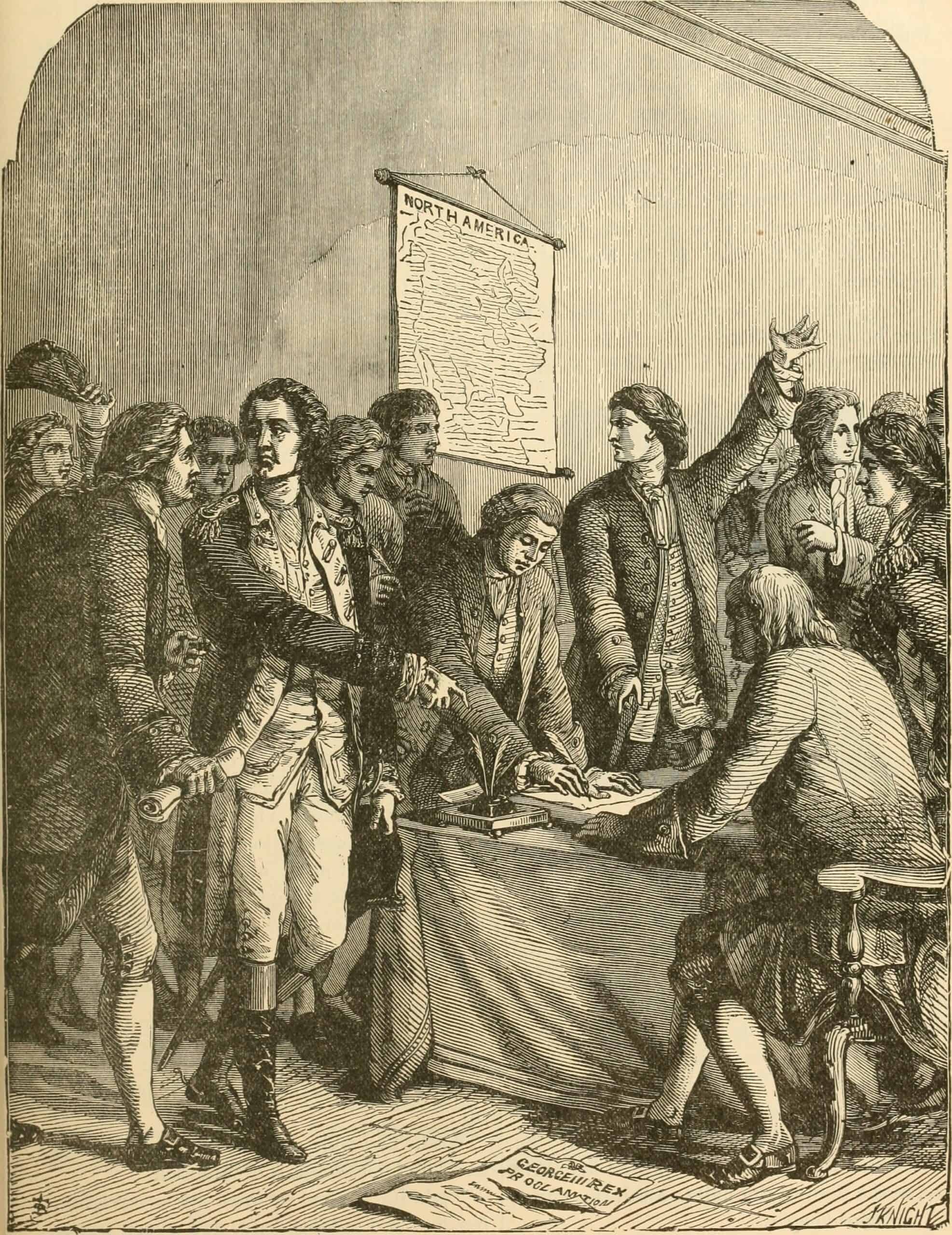
The Congress spent July 3rd debating and editing Jefferson’s draft declaration — the document that would articulate why independence had been declared, not just that it had been. The editing was, by some accounts, agonizing for Jefferson. Eighty-six changes were made to his text over the course of two days. Some were small. One was enormous: the Congress struck Jefferson’s lengthy condemnation of the slave trade, a passage he had included as one of his charges against King George III. The deletion was made to preserve the votes of South Carolina and Georgia, and to avoid alienating slaveholders in other colonies. It was a compromise that would cast a long shadow.
Jefferson sat in silence, reportedly, as his words were cut. Franklin, seated beside him, reportedly offered a story about a hatter who discovered that his friends had reduced his shop sign to nothing but his name — and concluded that the name alone would have to do.
It was, in other words, a working day. A day of argument, revision, and political calculation. Not a ceremony. Not a celebration. Not a moment of unified inspiration.
The Soldiers: Encamped, Hungry, and Uncertain
While Congress debated in Philadelphia, a Continental Army was in the field — and its situation on July 3, 1776 was precarious.
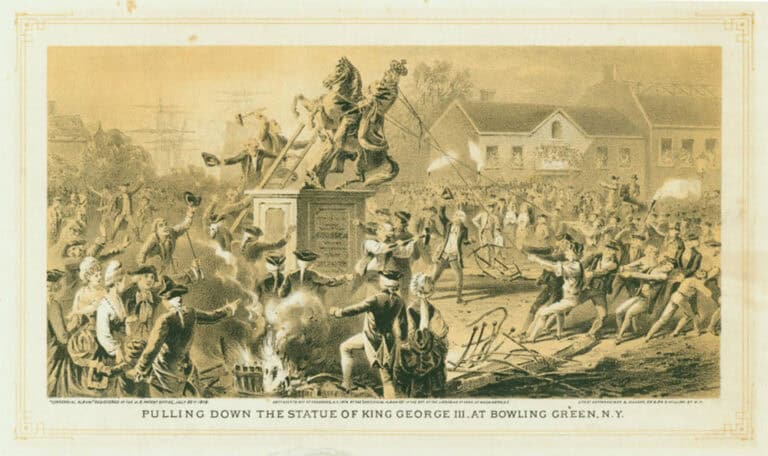
General George Washington and roughly 19,000 troops were on Manhattan Island and in the surrounding region, bracing for a British assault. The British fleet, under Admiral Richard Howe, had begun arriving in New York Harbor in late June. By July 3rd, some 130 ships were already visible from the New York shore — an overwhelming display of naval power that was deeply demoralizing to the colonial forces watching from land.
Washington’s army was ill-equipped, poorly supplied, and plagued by disease. Soldiers’ diaries from this period describe men sleeping in wet clothing, eating rotten provisions, and suffering from dysentery and smallpox. Pay was irregular. Enlistment terms were short, meaning Washington faced the constant threat that his army might simply dissolve when men’s contracts expired.
On July 3rd, Washington was preparing his defenses and anxiously awaiting news from Philadelphia. He believed independence was coming — he had been in quiet communication with members of Congress — but he had no certainty about the timing. What he knew with certainty was that a British force of unprecedented size was assembling off the coast, and that his army needed to hold New York.
For the ordinary soldier in Washington’s camp on July 3rd, the mood was a mixture of determination and dread. These were farmers, tradesmen, and apprentices who had picked up muskets. Many had never been far from home before. Now they were camped in a city, staring at the masts of the most powerful navy in the world.
The Loyalists: A Country Divided
It is easy, in retrospect, to imagine that the thirteen colonies were unified in their desire for independence by July 1776. They were not.
Historians estimate that somewhere between 15 and 20 percent of the colonial population were active Loyalists — people who remained faithful to the British Crown and opposed independence. Another significant portion of the population was genuinely neutral or undecided, more concerned with the disruption to trade, property, and daily life than with political philosophy.
On July 3, 1776, Loyalist newspapers in Philadelphia and New York were still publishing. Loyalist families were still attending church, running businesses, and in many cases quietly making plans — to flee to Canada, to British-held territory, or simply to keep their heads down and wait to see who would win.
In New York City, which had a particularly large Loyalist population, the mood was anxious. The city’s wealthy merchant class had prospered under British trade arrangements and had no particular enthusiasm for independence. Many quietly hoped that the British fleet assembling in the harbor would restore order.
The divisions were not only between neighbors — they ran through families. Benjamin Franklin’s own son William, the Royal Governor of New Jersey, remained loyal to the Crown. Father and son would never fully reconcile. On July 3rd, William Franklin was under house arrest in New Jersey, having refused to resign his governorship despite the Congress’s demands.
Far From Philadelphia: The View from the Countryside
For most colonists, July 3, 1776 was simply a Thursday in summer.
News traveled slowly in the eighteenth century. A letter from Philadelphia might take days or weeks to reach the Carolina backcountry, the farms of western Virginia, or the fishing villages in the coastal district of Maine (territory of the Commonwealth of Massachusetts). Newspapers existed, but they were expensive, irregular, and primarily circulated in towns. Many rural colonists learned of major events weeks after they occurred.
The debates in Philadelphia were known in broad outline to educated colonists — the newspapers had covered the growing push for independence — but the details were murky, the timeline uncertain, and the outcome far from clear. Most people knew that something momentous was being decided. They did not know it would happen tomorrow.
What they knew, concretely, was the disruption that the conflict had already brought to their lives. Trade with Britain had been disrupted. Goods were scarce and prices were rising. Men had been called into militia service, leaving farms short-handed. In some areas, fighting had already occurred — at Lexington and Concord the previous April, at Bunker Hill in June 1775, at Moore’s Creek Bridge in North Carolina earlier in 1776.
The war was not abstract. It was already costing people their sons, their savings, and their security.
For a Virginia tobacco farmer like the fictional William Hartwell we met in our Two Men, One Century series, July 3rd would have meant the same work it always did in early summer: tending his crop, managing his land, worrying about prices. But the war would have been present in his calculations in ways it had not been a year earlier. The British markets he depended on for his tobacco were disrupted. His county militia might call him up at any time. His neighbors were taking sides, and the choices being made in Philadelphia would shape his world for the rest of his life — whether he had any say in them or not.
What Women Were Doing
Independence, when it came, would belong formally to men — to the propertied men who voted, held office, and signed documents. But the revolution was being sustained, on July 3rd and every other day, by women.
Women were managing households and farms while husbands and sons were in the militia or the Continental Army. They were spinning cloth — homespun had become a political statement, a rejection of British manufactured goods that colonial women had turned into a form of patriotic participation. They were serving as informal intelligence networks, passing information between households and communities. In a few notable cases, they were making arguments that the new nation’s promises of liberty should extend to them as well.
Abigail Adams, writing to her husband John on March 31st — months before July 3rd — had famously urged him to “remember the ladies” in the new laws being made. John Adams had responded with what can only be described as patronizing amusement. The exchange captures something real about the revolution’s limits: it was being built by women’s labor and sustained by women’s sacrifice, while the formal rewards would go to men.
On July 3, 1776, Abigail Adams was in Braintree, Massachusetts, managing the farm, raising their children, and waiting for news. John was in Philadelphia, about to witness history. She had told him that July 2nd felt like a great turning point. She was right, even if the date would prove to be the 4th.
The Enslaved: What Independence Meant to Them
No honest account of July 3, 1776 can ignore the fact that roughly 500,000 people in the thirteen colonies were enslaved — approximately 20 percent of the total colonial population. For them, the question of what the revolution meant was not rhetorical. It was existential.
The Declaration that was being finalized in Philadelphia would proclaim that all men are created equal and endowed with unalienable rights. The men writing those words owned other human beings. The contradiction was not invisible to them — Jefferson’s deleted passage about the slave trade shows that it was actively discussed — but it was resolved, in the end, in favor of political expediency.
For enslaved people, the revolution presented a different kind of calculation. Lord Dunmore, the Royal Governor of Virginia, had issued a proclamation in November 1775 offering freedom to enslaved people who escaped their owners and joined British forces. Thousands had taken him up on it. The British, for many enslaved Americans, represented not tyranny but the possibility of freedom.
On July 3rd, some of those who had escaped bondage were serving in Dunmore’s Ethiopian Regiment or sheltering with British forces. Others remained enslaved on plantations where their owners were drafting declarations about liberty. The distance between the rhetoric and the reality was vast, and no one knew it better than they did.
The Night Itself
As darkness fell on July 3, 1776, Philadelphia was warm and humid. The members of Congress retired to their lodgings — taverns, rented rooms, private homes of supporters. Jefferson went back to his rented room on Market Street. Adams wrote more letters. Franklin, who was seventy years old and suffering from gout, made his way carefully through the summer streets.
In New York, sentries on the American fortifications watched the lights on the British ships in the harbor. Some of them were boys, barely old enough to shave.
In Massachusetts, in Virginia, in the Carolinas, in every colony, people went to sleep not knowing that by the next evening, the Continental Congress would have formally adopted the Declaration of Independence — a document that would change the world.
Most of them slept the way people always sleep on the night before everything changes: without knowing that it was.
What the 4th Really Meant — and What the 3rd Tells Us
The Declaration of Independence was formally adopted on July 4, 1776. But it was not signed by most of its signatories until August 2nd. It was not publicly read in many places until days or weeks later. News of it took months to reach some parts of the world.
As we explored in our piece on what was happening in Europe on July 4th, the rest of the world largely didn’t notice — or noticed and shrugged. The revolution would have to be won on the battlefield before it would mean anything beyond Philadelphia.
July 3rd, then, is a useful corrective. It reminds us that history does not announce itself. The people living through the founding of the United States were not watching a ceremony — they were navigating a civil war, a genuine crisis of loyalty and identity, with consequences for their farms, their families, their freedom, and in many cases their lives.
The men in Philadelphia on July 3rd were not mythological figures. They were politicians haggling over language. The soldiers in New York were not heroes — not yet. They were frightened young men staring at the most powerful fleet in the world.
The greatness of what happened on July 4th does not require us to flatten the complexity of July 3rd. If anything, understanding the uncertainty, the division, the fear, and the compromise makes what followed more impressive, not less.
They didn’t know it would work. They did it anyway.
Further Reading
If you want to go deeper into the world of 1776 and the people who lived through it, these books reward the investment:
- 1776 by David McCullough — The definitive popular history of the military and political year. McCullough’s account of Washington’s army in New York in the summer of 1776 is gripping.
- Revolutionary Summer: The Birth of American Independence by Joseph J. Ellis — A focused account of the pivotal months of June–September 1776, showing how military and political events were intertwined.
- The Ideological Origins of the American Revolution by Bernard Bailyn — For readers who want to understand why colonists made the arguments they did, this is the essential text.
- Liberty’s Exiles: American Loyalists in the Revolutionary World by Maya Jasanoff — The best account of what happened to those who chose the other side. Essential for understanding that 1776 was not a unanimous moment.
- Founding Mothers by Cokie Roberts — A readable account of the women behind the founders, many of whom were doing essential work on July 3rd and every other day of the revolution.
The story of 1776 didn’t begin on July 4th — and it didn’t belong only to the men in Philadelphia. If you found this piece useful, explore our other America 250 articles: What Was Happening in Europe on July 4, 1776? and A Colonial Farmer vs. an English Farmer in 1750, which follows two ordinary men living through the same century that produced the revolution.